Independent Research
How do bacteria respond to natural antibiotics during multispecies competition? Since many of these natural antibiotics are used therapeutically, studying how bacteria activate resistance mechanisms “in the wild” will yield mechanistic insight into clinical antimicrobial resistance (AMR). Leveraging my expertise and experience in molecular biophysics, cellular imaging, and systems biology to study AMR across spatial scales, I will discover how antibiotics activate gene regulatory networks and how molecular and cellular heterogeneity impact population dynamics during multispecies competition. Ultimately, my research will suggest novel treatment strategies that counter resistance.
How does the environment change the bacteria’s molecular response to antibiotics?
The metabolic state of bacteria plays an important role in their response to many forms of stress. Yet, most antibiotic testing is conducted using rich media, far from the conditions bacteria experience in their native environments or inside the host during infections. By combining microfluidics with single-molecule tracking and fluorescence microscopy, I will quantitatively measure key molecular processes during treatment with different antibiotics in media mimicking different environments (like host infection sites or soil ecosystems). By strategically testing antibiotics that use different mechanisms to kill bacteria, I’ll gain a mechanistic understanding of how the cell’s response is modulated by different environmental conditions, ultimately allowing us to predict how effective antibiotics will be in different clinical contexts.
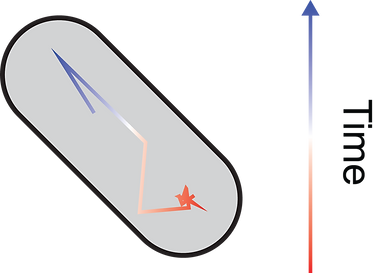
How do bacterial cells activate resistance mechanisms in response to antibiotics?
Many bacterial species use extracytoplasmic function (ECF) sigma factors to control responses to antibiotic stress and activate resistance mechanisms. The activation of sigma factors is complex and poorly understood, yet they play a critical role in bacterial survival and resistance during antibiotic treatment. Using single-molecule tracking as well as transcriptional reporter strains, I will monitor the activation of sigma factors during different antibiotic treatments. By combining these quantitative measurements with mathematical modeling and genetic perturbations, I will discover how molecular and cellular heterogeneity in gene regulation drives sigma factor activation and antibiotic survival.

How do resistance mechanisms change population dynamics during multi-species competition?
Most bacteria live in microcolonies containing hundreds of cells, using natural antibiotics and resistance mechanisms to compete with nearby species for space and resources. I will mimic these conditions by imaging competing species and tracking cell growth and death, as well as the activation of antibiotic production and resistance mechanisms. By combining genetic manipulations with agent-based models, I will understand how different resistance mechanisms allow species to survive in the environment, with implications for how we can leverage these mechanisms in the clinic.
